Mac Disk Utility Erase Free Space

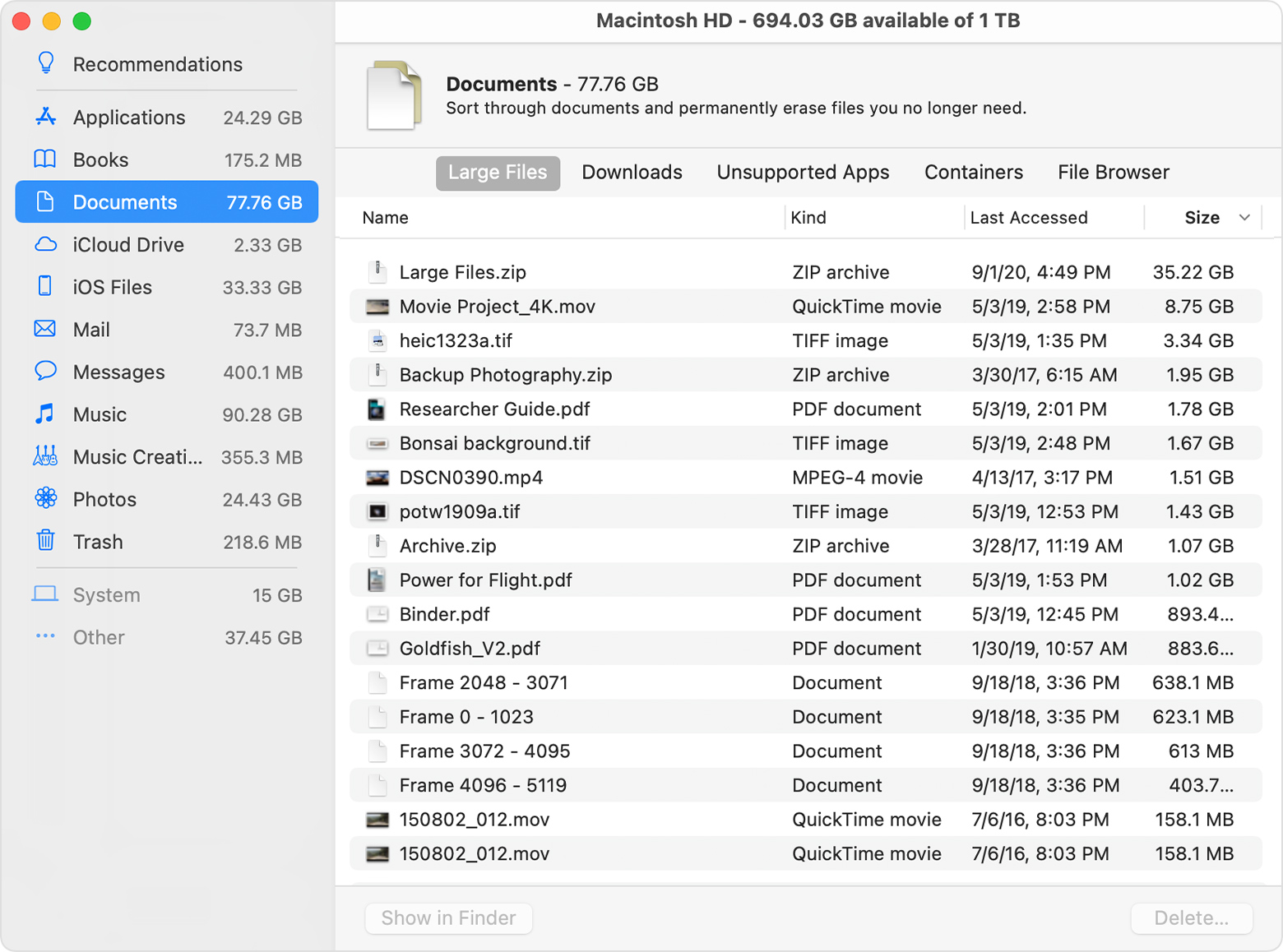
Cleaning these hidden files might free up storage space. To clean up Safari, simply click Safari on the menu at the top of the screen and select Clear History. Browsers such as Google Chrome and Mozilla Firefox can be cleaned in a similar way. Back to Table of Contents Video Showing how to obtain free space on your macOS or Mac OS X drive. Discover the world of external hard drives for Mac. Compare portable, USB and external hard drive models for office and home and shop online.
This method will erase all the files in your disk, so remember to back up your data beforehand. Follow the steps below to erase your disk on Mac: 1.Press and hold Command-R on Mac's startup to enter Recovery mode. 2.Select Disk Utility Continue from the Utilities window. 3.Select Macintosh HD and click Erase. Oct 12, 2020 No matter which drive your Mac has, let’s look at how to erase your Mac’s free space. Erase your free space. One way to securely erase free space on your Mac hard drive is to use the CleanMyMac X Shredder module. Though the main app is paid, this particular tool is 100% free to use.
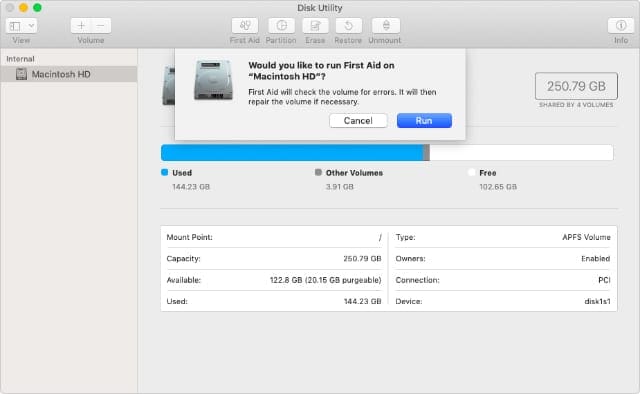
Disk Utility accomplishes the erase feature by creating large sparse image files in a preset directory. It then deletes them with the srm tool (secure remove) and an overwrite pattern of your choice. If Disk Utility is interrupted, this sparse image is left on the disk just taking up space. Starting another free space erase session makes. May 29, 2018 In this case, we just want to free up the space for a new use, and aren’t worried about anyone being able to recover any of our old data. Launch Disk Utility, located in the /Applications/Utilities folder. Select View, Show All Devices, or click the View button in the Disk Utility toolbar, and select Show All Devices from the popup menu. To wipe your mechanical drive, open Disk Utility, which you’ll find in Applications Utilities. Connect the drive you want to securely delete, then click it in the sidebar. Make sure you click the drive you want to securely delete: you do not want to erase some other hard drive by mistake! When you’re ready, click the “Erase” button.
Find Hard Drive On Mac
- Oct 26, 2014 Hard Drive Space Mysteriously Filling Up MacBook OX 10.5 by armwood Aug 14, 2009 11:51AM PDT One day I had 8gb free the next day it was full and I did not add any files.
- Sep 22, 2019 Mac OS X disk space - Reclaim lost disk space with disk utilities. Given my Mac disk space emergency, I decided to see if I could finally reclaim some of my lost disk space, so I downloaded two free Mac OS X disk utility tools to help me. In the end I was able to reduce my disk use from 97% down to 88%, and both of these Mac OS X disk utilities.
Disk Utility User Guide
Partitioning a disk divides it into individual sections, each of which acts as a separate volume.
However, with APFS, you shouldn’t partition your disk in most cases. Instead, create multiple APFS volumes within a single partition. With the flexible space management provided by APFS, you can even install another version of macOS on an APFS volume.
Important: If you’re partitioning your internal physical disk because you want to install Windows, use Boot Camp Assistant instead. Do not use Disk Utility to remove a partition that was created using Boot Camp Assistant. Instead, use Boot Camp Assistant to remove the partition from your Mac.
Add a partition
Important: As a precaution, it’s best to back up your data before creating new partitions on your device.
In the Disk Utility app on your Mac, select a volume in the sidebar, click the Partition button , then click Partition.
Reformat usb bootable drive mac os intallation. Internal storage devices appear below the Internal section in the sidebar. External devices appear below the External section in the sidebar.
When you select a volume that already has data on it, the pie chart shows a shaded area representing the amount of data on the volume and an unshaded area representing the amount of free space available for another volume. Disk Utility also shows whether the volume can be removed or resized.
Note: If you see a small volume with an asterisk, the partition is smaller than can be represented at the correct scale in the chart.
Click the Add button .
Type a name for the volume in the Name field.
For MS-DOS (FAT) and ExFAT volumes, the maximum length for the volume name is 11 characters.
Click the Format pop-up menu, then choose a file system format.
Enter the size or drag the resize control to increase or decrease the size of the volume.
Click Apply, click Partition, then click Continue.
Click Show Details to view the step-by-step process of creating a new volume.
After the volumes are created, click Done.
After you partition a storage device, an icon for each volume appears in both the Disk Utility sidebar and the Finder sidebar.
Delete a partition
WARNING: When you delete a volume or partition, all the data on it is erased. Be sure to back up your data before you begin.

In the Disk Utility app on your Mac, select a volume in the sidebar, click the Partition button , then click Partition.
In the pie chart, click the partition you want to delete, then click the Delete button .
If the Delete button is dimmed, you can’t delete the selected partition.
Click Apply, then click Partition.
After the volume is deleted, click Done.
Erase a partition
Free Mac Os X Download
In the Disk Utility app on your Mac, select the volume you want to erase in the sidebar.
Click the Erase button , then click Erase.
If the Erase button is dimmed, you can’t erase the selected volume.
After the volume is erased, click Done.
Enlarge a partition on a storage device
If you have multiple partitions on a device and one of them is running out of space, you may be able to enlarge it without losing any of the files on it.
To enlarge a volume, you must delete the volume that comes after it on the device, then move the end point of the volume you want to enlarge into the freed space. You can’t enlarge the last volume on a device.
WARNING: When you delete a volume or partition, all the data on it is erased. Be sure to back up your data before you begin.
In the Disk Utility app on your Mac, select a volume in the sidebar, then click the Partition button .
In the pie chart, select the partition you want to delete, then click the Delete button .
Click Apply.
The partition is removed, reformatted, and all free space is assigned to the previous partition.
Click Done.
If you are planning to sell your Mac or giving it to a third person for permanent use, then you must erase the hard drive first. This is how you can prevent your data falling into wide of the mark hands.
In case, you are using a newer Mac with an SSD, then you have to take extra care.
You can easily ensure in several ways that data saved on your traditional hard drive is securely deleted. But, they do not really help if you have an SSD. As your SSD won’t fall into the category of a hard drive.
AboutSecurely Erasing SSD:
If your Mac comes with an SSD, Apple’s Disk Utility won’t let you to securely erase the SSD. Yes, Secure Erase and Erasing Free Space options are not available in Mac Disk Utility.
Mac Can't Erase Disk
People say these options are not required for an SSD since a standard erase itself is enough potential to make SSD data recovery hard. And, some says securely erasing an SSD, can cause wear and tear on its memory cells which affect the drive’s reliability and performance.
Leaving all these discussions, if you just want to securely erase free space on your SSD then here are two different ways you can try.
Before you getting started with it, let me tell something that “this is not really needed; as Apple itself made so hard to secure erase an SSD. But, if you are set on it then, give a second thought to your mind and proceed.
How to Securely Erase a Mac SSD?
Method 1: Steps to Securely Erase a Mac SSD from Terminal
Step 1: Open Applications folder and switch to Utilities folder.
Step 2: Run the Terminal application.
Step 3: Type diskutil secureErase freespace VALUE /Volumes/DRIVE and hit Enter key
Note: Type a number between 0 and 4 in place of VALUE. 0 for single-pass run of zeroes, 1 for single-pass run of random numbers, 2 for 7-pass erase, 3 for 35-pass erase, and 4 for 3-pass erase. Replace DRIVE with the name of your SSD. To run a 7-pass erase in “Peters-Macbook”, use diskutil secureErase freespace 2 /Volumes/Peters-Macbook code.
And if, there is a space in the name of your drive, use a backslash instead of each space (for instance to denote Mac Drive -> Mac Drive).
Method 2: Steps to Securely Erase a Mac SSD Using Disk Utility
Step 1: Reboot Mac, hold the OPTION key and select Recovery partition.
Step 2: Next, in OS X Utilities menu click on Disk Utility.
Step 3: Select the SSD primary partition and choose Erase option.
Step 4: Under Format, opt for Mac OS Extended (Journaled, Encrypted).
| Add-On: Have you accidentally formatted a wrong volume or drive on your Mac machine? Then, try Yodot Mac Data Recovery and unformat the Mac drive or volume easily. |
Step 5: Hit Erase button, and set encryption password.
Erase Free Space Windows
Step 6: Wait till your drive gets erased and encrypted. It takes time, depending on type, size, and speed of the drive.
Step 7: Next opt Disk Utility and choose Mac OS Extended (Journaled).
Now, Erase Free Space and Security Options are accessible (they are not grayed out).
Step 8: Click on Security Options and select 35-Pass Erase.
Step 9: Hit the OK button and wait until completion of the process.